Loading...
Serving Minot, ND and surrounding areas. (701) 498-6599
Most Minot homes are under-insulated for this climate. Blown-in insulation fills every gap and gets your attic to the level it actually needs to be.
Blown-in insulation in Minot fills your attic or walls with loose fiberglass or cellulose insulation, creating a continuous layer that stops heat from escaping - most attic jobs are completed in half a day and start working immediately. Minot sits in Climate Zone 7, one of the coldest designations in the country, and the Department of Energy recommends R-49 to R-60 for attics in this region. Most homes built before 1990 are nowhere close.
If your heating bills spike every January and February, or you have seen ice dams form along your roofline, under-insulation is almost always part of the cause. Blown-in material fills corners and irregular spaces that rolled batts can not reach, which is why it works so well in existing homes. Many homeowners also combine it with whole-home insulation for a complete upgrade.
Air sealing before installation matters as much as the insulation itself. A contractor who skips that step is one of the most common reasons homeowners are disappointed with their energy bills after a job.
Minot winters are long and heating costs in a poorly insulated home are real. If your gas bill jumps dramatically during cold snaps or your furnace runs almost constantly, heat is escaping faster than it should. A properly insulated attic holds warmth steadily even at -20F.
If bedrooms at one end of the house feel noticeably colder than the living room, uneven insulation coverage is a common cause. Blown-in insulation can thin out or settle over time, leaving cold spots where coverage has dropped below the recommended depth.
Ice dams form when heat escapes through an under-insulated attic and melts snow unevenly on the roof. The meltwater refreezes at the cold eaves and can back up under your shingles. Improving attic insulation and air sealing addresses the root cause rather than just managing the symptom.
Homes built before the 1990s in Minot were insulated to standards well below what is recommended today. If you have never had insulation added or replaced, you are likely working with a fraction of what your attic needs for this climate. Age alone is a reasonable reason to have it checked.
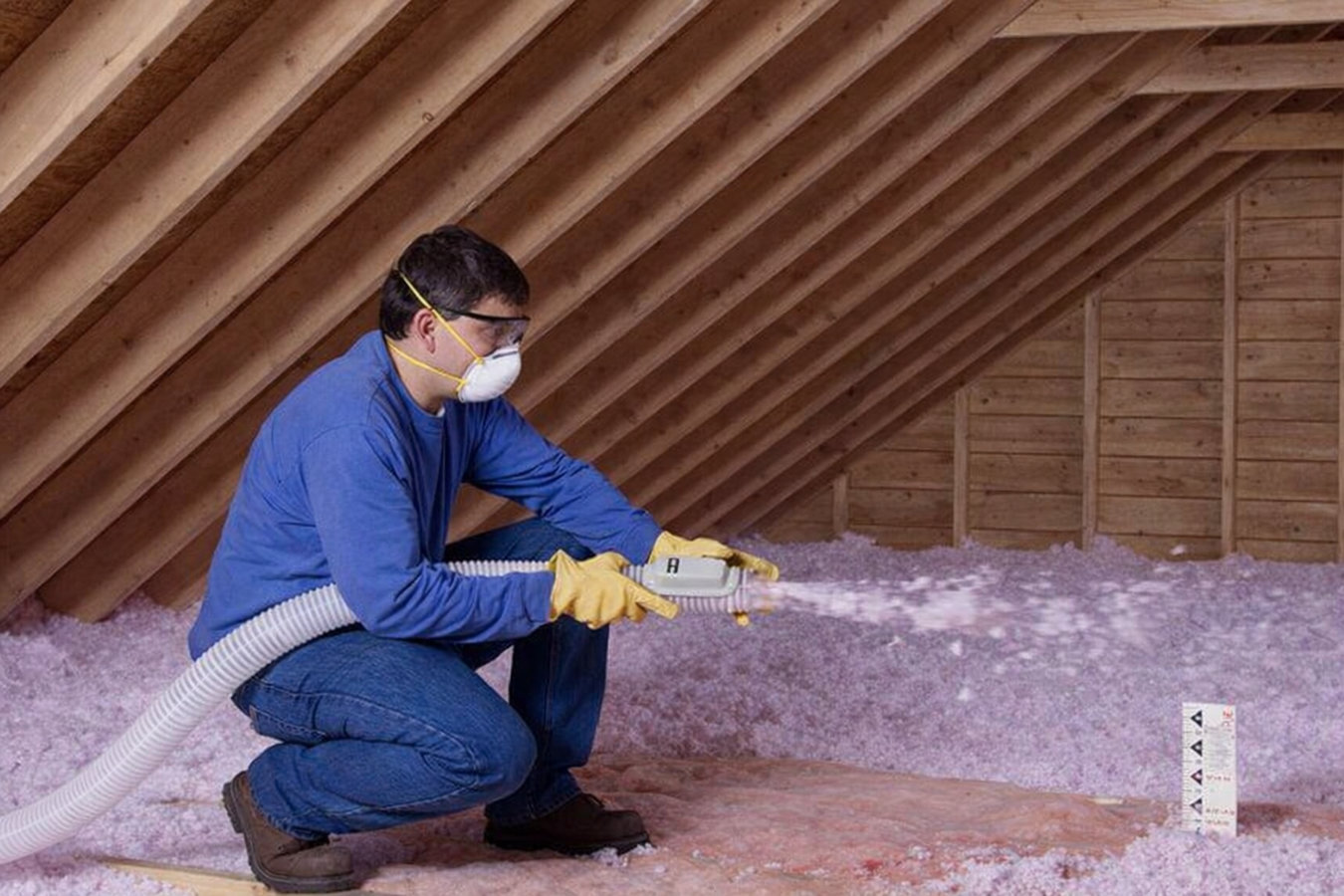
We install blown-in insulation in attics, walls, and hard-to-reach spaces throughout the Minot area. Attic installation is the most common project - we measure the current depth, seal air gaps around pipes and fixtures, then blow in material to reach the recommended R-value for North Dakota. For existing walls, we drill small access holes and blow insulation into the cavity before patching, which is far less disruptive than opening up walls from the inside. Both approaches pair well with wall insulation if you want to address multiple areas in one visit.
Every job starts with an honest assessment. We check existing insulation depth, look for air bypasses, and explain exactly what we recommend and why before any work begins.
Best for homeowners who want the highest return from a single upgrade and are dealing with ice dams or high heating bills.
Suited to older homes where wall insulation was never installed or has settled significantly over decades.
Lightweight option that resists moisture and works well in attics with good vapor control already in place.
Dense-pack cellulose fills tight spaces effectively and is a good choice for wall cavities in existing homes.
Minot averages January lows around -5F with wind chills that push well below -30F during harsh stretches. The Department of Energy places Minot in Climate Zone 7, which carries the highest recommended attic insulation levels in the country - roughly twice what a homeowner in the South would need. A significant share of Minot homes were built in the 1950s through 1980s, when insulation requirements were far less demanding. If your home is from that era and has never had an upgrade, the gap between what you have and what you need is likely dramatic.
Homes near Minot and surrounding communities like Rugby face the same Climate Zone 7 demands. Proper blown-in insulation to the recommended depth is one of the highest-return upgrades a homeowner in this region can make. The energy savings start in the first full winter after installation and compound every year that follows. North Dakota also has a weatherization assistance program for qualifying households and utility rebates through MDU Resources that can offset costs - the North Dakota Community Services energy page has current program details.
Call or submit a request online and we respond within 1 business day. We will ask basic questions about your home and schedule a time to come out. No commitment required at this stage.
We measure existing insulation depth, check for air gaps around pipes and fixtures, and walk you through what we find in plain terms. You receive a written estimate before any work is agreed to.
We set up the blowing machine outside, run a hose through your attic hatch, seal air bypasses first, then blow in material to the recommended depth. Most attic jobs wrap up in half a day. Your living spaces stay untouched.
Before leaving, we measure insulation depth at multiple points and show you the results. We leave a permanent depth marker so you can check it yourself anytime. The crew cleans up any dust near the access hatch.
We respond within 1 business day. This estimate is completely free with no obligation. Once you submit, someone from our office will call to schedule a free on-site assessment at your convenience.
(701) 498-6599You can not see blown-in insulation once the job is done. We measure at multiple points across the attic floor and show you the results before we leave. A permanent depth marker stays in your attic so you have proof of what is there.
Skipping air sealing before blowing is one of the most common shortcuts that leaves homeowners disappointed with their energy bills afterward. We seal gaps around pipes, wires, and fixtures as part of every attic job. Insulation slows heat movement - air sealing stops it sneaking through holes entirely.
The recommended attic R-value for Minot is R-49 to R-60. That is about twice what a home in the South needs. We work to those numbers on every job. According to the U.S. Department of Energy, properly insulating and air sealing can save homeowners 10-20% on total energy costs annually.
We come to your home, measure what is there, and tell you exactly what we recommend and why. You get a written quote. There is no minimum charge to find out what your home actually needs, and we are happy to answer questions without pushing you toward a decision.
Every blown-in insulation job we do is measured to the recommended performance level for Minot's climate. We stand behind the work with a written record of what was installed.
Have a question not covered here? Give us a call and we will answer it straight.
Complete whole-home insulation assessment and installation covering attic, walls, crawl space, and basement in a single coordinated project.
Learn more →Dense-pack blown-in installation into existing wall cavities without opening walls from the inside, preserving your finishes.
Learn more →Climate Zone 7 winters start early - schedule your free estimate now and get the upgrade in place before heating costs peak.