
Loading...
Serving Minot, ND and surrounding areas. (701) 498-6599
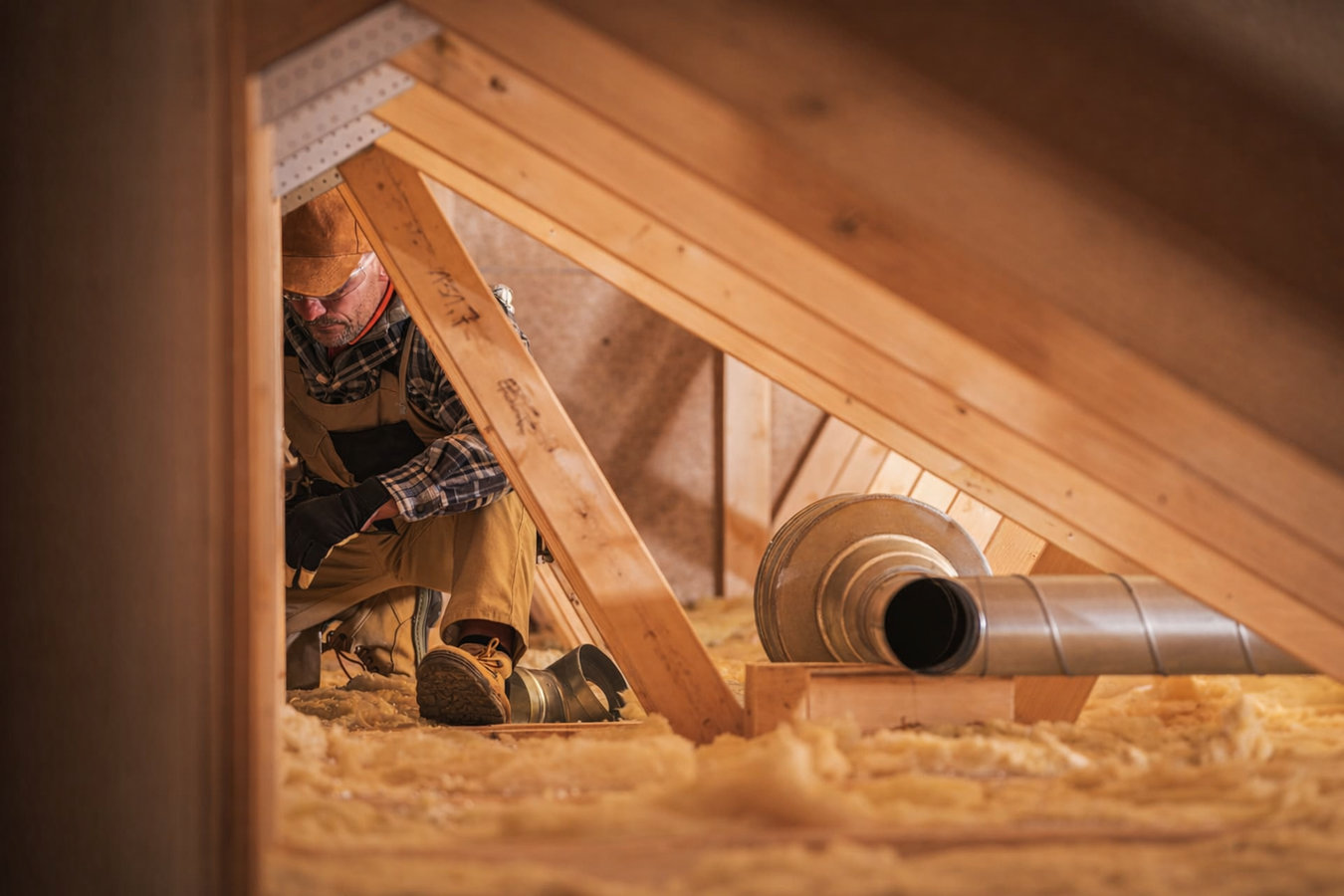
Minot Insulation serves Jamestown, ND homeowners with home insulation, attic insulation, and basement insulation - we reply within 1 business day and include a free on-site estimate with every inquiry.
Jamestown has a large share of homes built before 1960 - most of them with original insulation that has settled and degraded over decades. Home insulation for an older Jamestown house means assessing every area - attic, walls, basement, and crawl space - and bringing the whole building envelope up to a standard that a long North Dakota winter cannot defeat.
Jamestown attics in homes from the 1940s through 1970s are almost always under-insulated by today's standards, and that is where the most heat leaves the building. Adding depth to a Jamestown attic - often with blown-in insulation - is typically the fastest way to reduce heating bills and stop the ice dams that form along rooflines every January.
Full basements are the standard in Jamestown because the frost line runs 5 to 6 feet deep - a slab would crack in a hard winter. Older Jamestown basements have bare concrete walls that pull heat out of the house all season, and many of them also have small moisture issues from decades of freeze-thaw cycles working on the foundation. Insulating the walls addresses both problems at once.
Blown-in loose-fill insulation works particularly well for Jamestown attics that already have existing joists and limited clearance. It can be added quickly without demolition and fills around every rafter and penetration, making it one of the most practical upgrades for the ranch homes and bungalows that make up much of Jamestown's post-war housing stock.
In older Jamestown homes, gaps around ceiling light fixtures, plumbing penetrations, and the attic hatch allow heated indoor air to rise into the attic continuously - and new insulation on top of those gaps will not stop that airflow. Air sealing those pathways before adding insulation depth means the upgrade performs as well in year ten as it does in year one.
Jamestown is a stable, long-established city in south-central North Dakota, and its housing stock reflects that history. A large portion of homes were built before 1960, and many of those were insulated to standards that made sense for energy costs at the time but are nowhere near what North Dakota winters demand today. Original attic insulation from the 1950s often measured just 2 to 3 inches deep - compared to the 14 to 16 inches that current energy code recommends for this climate zone. Winter temperatures in Jamestown regularly fall below zero, and the heating season stretches from October through April, sometimes into May. A home built for those conditions with 1950s insulation is working against itself every single month of the heating season.
Jamestown also sits in a climate that cycles through repeated freeze-thaw events in spring and fall. Water finds its way into small gaps in foundations, masonry, and exterior wood, freezes, expands, and makes those gaps larger each year. Ice dams on roofs are a consistent winter complaint in the city because so many attics are under-insulated and allow heat to escape through the roof deck. The combination of old construction and a hard climate creates genuine, fixable problems - and a contractor who has worked on Jamestown homes knows which solutions are worth the investment and which ones are not.
Working in Jamestown means encountering homes that have been patched, updated, and added onto across multiple decades - often by different contractors at different times. A 1920s bungalow near downtown might have a 1970s addition with a different wall system, and a ranch home on the south side might have had its attic partially re-insulated in one section but not another. Our crew checks the actual conditions in each area of the home before recommending anything, because what looks like a simple job from the outside is sometimes more complicated once you get into the attic.
Jamestown is a regional hub in south-central North Dakota, situated along Interstate 94 between Bismarck to the west and Fargo to the east. The city is home to the University of Jamestown, one of the oldest institutions in the state, and the James River runs through the community, with the Jamestown Reservoir providing a popular outdoor recreation area to the west of the city. The older neighborhoods near downtown and the university are where we see the most older housing stock - homes that genuinely benefit from a full insulation assessment.
We serve Jamestown and the surrounding region, including customers in Dickinson, ND to the west who are looking for a contractor with experience on older housing stock across south-central and southwest North Dakota.
Call or submit your information online. We respond within 1 business day - no automated replies or call center scripts. Just a straightforward conversation about what you are seeing in your home.
We come to your Jamestown home, inspect the attic, basement, crawl space, and any areas you are concerned about, and check for moisture issues or old insulation that needs to come out. You get a written estimate with a firm price before anything starts.
Once you approve the estimate, we book the work around your availability. If permits are required by the City of Jamestown, we pull them and handle the inspection coordination - that is not your responsibility.
After installation, we walk the finished areas with you so you can see exactly what was done and where. Most Jamestown homeowners notice a real difference in how their home holds warmth within the first week of cold weather after the work.
We work on homes all across Jamestown - from the older neighborhoods near the University of Jamestown to the ranch-style homes on the south side. No obligation, no pressure.
(701) 498-6599Jamestown is a city of about 15,000 people in Stutsman County in south-central North Dakota, situated on the James River where Interstate 94 crosses US Highway 281. It has been a regional center for agriculture, healthcare, and services for well over a century, and it is home to the University of Jamestown, a private four-year institution founded in 1883. The city is best known outside of North Dakota for the World's Largest Buffalo - a 26-foot-tall concrete landmark that has stood near the North Dakota Frontier Village since 1959. Jamestown is not a fast-growth city; it is a stable community where most residents are long-term homeowners who take their properties seriously. Customers from Mandan, ND and other communities along the I-94 corridor often compare notes with Jamestown homeowners on contractors and home improvement options.
The city's housing mix is older than most. Homes near downtown and around the university tend to be the oldest - many built between the 1910s and 1950s, featuring wood-frame construction, full basements, and original windows and siding that have been repaired and patched over the decades. The south and east sides of the city have more post-war ranch homes from the 1950s through 1970s, many of which have had additions and updates but still carry original insulation in sections that have not been touched. The Jamestown Reservoir, just west of the city, is a familiar landmark for local families and a good reference point for the western edge of the Jamestown service area.
High-performance spray foam that air-seals and insulates in one application.
Learn more →Loose-fill insulation that fills gaps and hard-to-reach spaces effectively.
Learn more →Protect your floor system and improve comfort with crawl space insulation.
Learn more →Seal air leaks throughout the building envelope to cut energy waste.
Learn more →Keep your basement dry and comfortable year-round with proper insulation.
Learn more →Dense, moisture-resistant foam ideal for demanding insulation applications.
Learn more →Lightweight, soundproofing foam suited for interior walls and attics.
Learn more →Industrial-grade insulation solutions for commercial and retail buildings.
Learn more →Block ground moisture from entering your crawl space with a vapor barrier.
Learn more →Professional vapor barrier installation to control moisture in any space.
Learn more →Stop conditioned air from escaping through the attic floor and penetrations.
Learn more →Add insulation to existing structures without major renovation or demolition.
Learn more →Serving these cities and communities.
Contact us today and we will respond within 1 business day with a free on-site estimate - before any work begins, before any commitment.