
Loading...
Serving Minot, ND and surrounding areas. (701) 498-6599
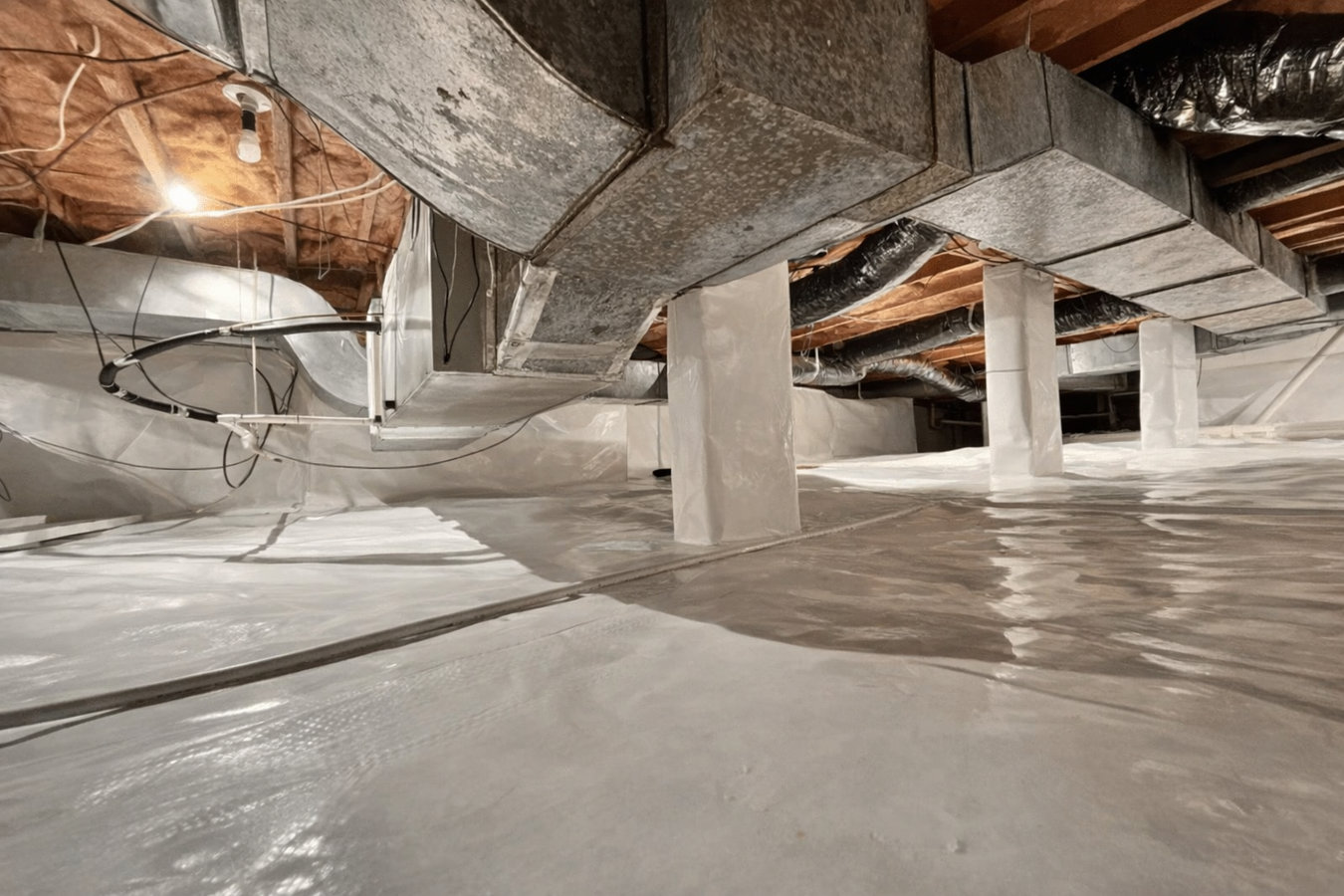
Ground moisture creeping up through your crawl space damages wood, ruins insulation, and makes your home smell. A properly installed vapor barrier stops it at the source.
A crawl space vapor barrier in Minot is a thick sheet of polyethylene plastic laid across the bare dirt floor to block ground moisture from rising into your home - most installations are completed in a single day without disrupting your routine.
Minot sits on dense glacial lake-bed soils that hold water like a sponge. Every spring, when the deeply frozen ground thaws, large amounts of soil moisture get pushed upward. Without a barrier, that moisture rises into your floor joists, insulation, and living space, causing rot, mold, and higher heating bills. Many homes in established Minot neighborhoods were built in the 1950s through 1970s before vapor barriers were standard practice, so bare dirt crawl spaces are common.
A vapor barrier works best when paired with good crawl space insulation. If you are also noticing cold floors or high heating bills, our crawl space insulation service addresses both problems at once and can be bundled with barrier installation to save on labor costs.
A persistent earthy odor that intensifies in April and May - when Minot's frozen ground begins to thaw - is one of the clearest signs that moisture is rising from your crawl space. That smell is the early stage of mold growth on wood and insulation. It will not go away on its own until the moisture source is addressed.
If your floors feel noticeably colder than the rest of your home in winter, or if there are spots that feel slightly springy underfoot, moisture damage to the wood framing below may already be underway. Wet floor insulation loses most of its ability to hold heat, making your furnace work harder than it should.
If you have looked into your crawl space with a flashlight and seen exposed soil or a thin, crinkled piece of plastic that looks like it has been there since the 1970s, your home almost certainly needs a new vapor barrier. Bare dirt is a direct moisture pathway into your home's structure, and degraded old plastic provides little real protection.
If you noticed standing water near your foundation or wet soil against your crawl space walls after snowmelt, that moisture is working its way under your home too. Minot's clay soils drain slowly, so water that appears in March or April can keep feeding your crawl space well into June.
We install heavy-gauge polyethylene sheeting rated 10 mil and above - thick enough to survive foot traffic during HVAC inspections and heavy enough to resist punctures from rocks or debris on the ground. Every seam is overlapped a minimum of 12 inches and taped completely, and the edges run up the foundation walls so there are no gaps for moisture to sneak through. For homeowners dealing with ongoing moisture problems, we also offer full vapor barrier installation that extends coverage to basement walls and other moisture-prone areas of the home.
After the barrier is down, we walk you through the finished installation and take photos so you have a record of what was done - useful if you ever sell the home or have questions down the road. We will also tell you honestly if your crawl space has problems that go beyond what a barrier alone can solve, such as standing water that needs to be redirected before any plastic goes down.
The most common solution - heavy plastic sheeting laid across the crawl space floor to block rising ground moisture.
For homeowners who want more complete protection, we run the barrier up the foundation walls and seal the perimeter.
If the crawl space has accumulated rocks, old insulation, or construction debris, we clear it before installing the new barrier.
Combining a new vapor barrier with crawl space insulation in one visit saves on labor and solves both moisture and energy problems at once.
Minot experiences some of the most dramatic temperature swings in the continental United States. When frozen ground thaws quickly in spring, large amounts of soil moisture get pushed upward all at once - and Minot's dense clay soils hold that moisture for weeks, not days. This creates a persistent, season-long source of upward moisture that is more damaging than the short-term spikes you might see after a rainstorm. Homes near the Souris River corridor face additional risk: the 2011 flood raised groundwater levels across a wide area, and some properties in lower-lying neighborhoods still deal with elevated soil moisture years later.
We serve homeowners throughout the region, including customers in Rugby and Harvey, where older housing stock and similar clay-heavy soils create the same crawl space moisture challenges that Minot homeowners face. Wherever you are in north-central North Dakota, the fundamentals are the same - ground moisture is a year-round problem, and a properly installed vapor barrier is the first line of defense.
We respond within 1 business day. We will ask a few basic questions - home size, whether you have noticed any smell or moisture, and when anyone last checked the crawl space. No technical knowledge required.
A contractor physically goes into your crawl space to check the condition of the soil, any existing plastic, and whether there are access or moisture issues to address first. This visit is free and produces a written estimate.
The crew clears any debris, rolls out and cuts the sheeting, overlaps and tapes all seams, and runs the edges up the foundation walls. Most Minot homes are done in a single day. You can stay home - the work happens entirely under the house.
Before the crew leaves, they walk you through the finished installation and provide photos. You should see complete floor coverage with no bare soil visible. Over the next few weeks, pay attention to whether that musty smell fades - it usually does within a month.
We respond within 1 business day, and the on-site assessment is completely free with no obligation. Someone from our office will call to schedule a visit at a time that works for you.
(701) 498-6599Every job starts with a free written estimate that spells out the scope, materials, and coverage before our crew goes under your home. You know exactly what the work involves and what it costs, with no surprises once we start.
We work across 12 service areas in North Dakota, which means we have seen what ground moisture does to homes in Minot's clay soils and in flood-adjacent neighborhoods near the Souris River. That local experience shapes how we assess and install for every home.
Because most homeowners do not want to crawl under the house themselves, we take photos during and after every installation. You get a record of what was done, what condition the crawl space was in before, and what full coverage looks like - useful if you ever sell or file an insurance claim.
We know moisture problems feel more urgent once you know they are there. We aim to respond within 1 business day and provide a written estimate before any work begins - no surprises on the final bill.
Crawl space moisture is one of those problems that is easy to ignore until the damage becomes expensive. The EPA recommends addressing moisture sources early before mold and structural damage take hold - and a vapor barrier is one of the most cost-effective ways to do exactly that in a Minot crawl space.
Full vapor barrier services covering crawl spaces, basements, and other moisture-prone areas of your home.
Learn more →Add insulation alongside your vapor barrier for a crawl space that is both dry and energy-efficient.
Learn more →Minot's freeze-thaw season moves fast - book now and have your crawl space protected before ground moisture surges again. Free estimates, written quotes, 1 business day response.